Guides Adult Health Problems
Adult
Common health problems in adult Dobermans
Updated November 2026 · By Owego Dobermans
The short answer
Besides heart disease, the conditions to know in adult Dobermans are hypothyroidism, wobbler syndrome, von Willebrand disease (a bleeding disorder), hip dysplasia, bloat and bone cancer. Most are manageable when caught early, so learn the signs, keep annual vet visits, and tell every vet your dog's vWD status before surgery.
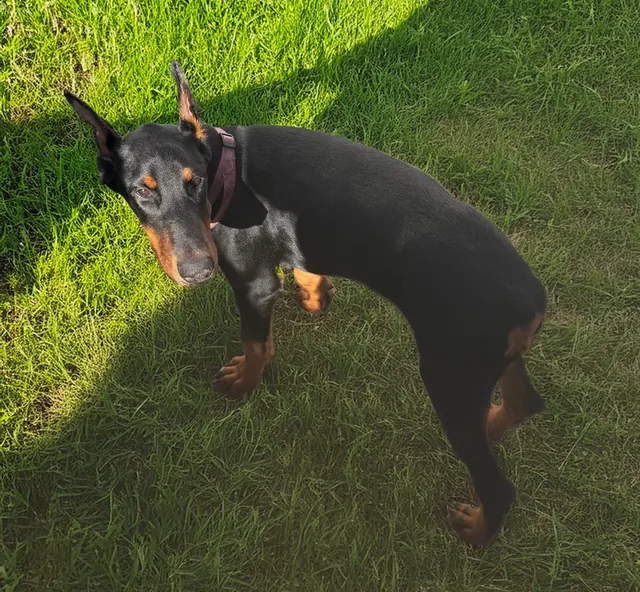
The Doberman Pinscher Club of America lists several hereditary conditions in the breed. Some can be screened for and some can't, so knowing the early signs is your best tool. Heart disease has its own page: Doberman DCM and heart screening.
Hypothyroidism
The thyroid gland doesn't make enough hormone. The Merck Veterinary Manual names the Doberman among predisposed breeds, with onset most common at 4 to 10 years.
- Signs: low energy, weight gain without eating more, seeking warmth, dry coat, heavy shedding and thinning hair on the body and tail.
- What to do: a blood test confirms it. Treatment is a daily thyroid pill for life, and most dogs do very well. The DPCA suggests annual thyroid testing.
Wobbler syndrome
Cervical spondylomyelopathy squeezes the spinal cord in the neck. The Merck Veterinary Manual describes it as most common in large and giant breeds, with Dobermans among the most often affected.
- Signs: a wobbly or swaying back end, scuffed toenails, a wide stance, neck pain or a low head carriage.
- What to do: see your vet promptly; diagnosis needs imaging such as an MRI. Use a harness instead of a neck collar for a dog with neck pain.
Von Willebrand disease (vWD)
An inherited bleeding disorder that is common in Dobermans, according to Merck. Affected dogs may bleed more than normal after surgery, injury or tooth extraction. A DNA test shows whether a dog is clear, a carrier or affected.
Before any surgery: tell your vet your dog's vWD DNA result. If you don't know it, ask about testing first. Owego's breeding dogs are DNA tested through Embark, including vWD.
Hip dysplasia
A malformed hip joint that can lead to arthritis. The DPCA recommends OFA hip certification for breeding dogs. Watch for stiffness after rest, a bunny-hop gait, or trouble with stairs and jumping into the car. Keeping your dog lean is one of the best ways to protect joints.
Bloat (GDV)
A life-threatening emergency in deep-chested breeds. The Merck Veterinary Manual notes that many veterinary surgeons recommend a preventive gastropexy (tacking the stomach to the body wall) for at-risk breeds, often done during a spay or neuter. It doesn't stop the stomach filling with gas, but it should prevent the deadly twist. Ask your vet whether it makes sense for your dog. See feeding an adult Doberman for everyday prevention.
Bone cancer
Osteosarcoma accounts for over 80% of bone tumors in dogs, according to the Merck Veterinary Manual. It most often affects the long bones near the shoulder, wrist and knee. Signs are lameness that doesn't improve, swelling on a leg bone, or a sudden fracture without a clear injury. Any limp that lasts more than a few days in an adult large-breed dog deserves a vet visit and X-rays.
Skin and coat
Blue and fawn Dobermans can develop color dilution alopecia. See adult coat and skin care.
See a vet right away for
- Fainting, collapse or sudden weakness
- A swollen belly with retching
- Stumbling, dragging feet or sudden neck pain
- Bleeding that won't stop
- Labored breathing, or a limp with swelling over a bone
For the first-year version of this page, see Doberman puppy health basics on our puppy guide.
Frequently asked questions
What health problems are common in Dobermans?
Dilated cardiomyopathy (DCM) is the most important. Others include hypothyroidism, wobbler syndrome, von Willebrand disease, hip dysplasia, bloat and some cancers.
Should my Doberman have a gastropexy?
Many veterinary surgeons recommend a preventive gastropexy for at-risk breeds like the Doberman, often during a spay or neuter. Ask your vet about the benefits and risks for your dog.
How is hypothyroidism treated in Dobermans?
With a daily thyroid hormone pill for life, plus periodic blood tests to check the dose. Most dogs do very well on treatment.
Sources
- Doberman Pinscher Club of America: Health
- Merck Veterinary Manual: Hypothyroidism
- Merck Veterinary Manual: Cervical spondylomyelopathy (wobbler syndrome)
- Merck Veterinary Manual: Bleeding disorders of dogs (von Willebrand disease)
- Merck Veterinary Manual: Gastric dilation and volvulus (bloat)
- Merck Veterinary Manual: Bone tumors in dogs and cats