Guides Coat & Skin
Every week
Coat, skin and grooming for adult Dobermans
Updated November 2026 · By Owego Dobermans
The short answer
Brush once or twice a week, bathe only when needed, trim or grind nails every 1 to 2 weeks, clean ears as needed, and brush teeth several times a week. Use grooming time to check for lumps and skin changes. Blue and fawn Dobermans can develop color dilution alopecia and benefit from a gentle, vet-guided skin routine.
Weekly routine
| Task | How often | Tip |
|---|---|---|
| Brush | 1 to 2 times a week | Rubber curry or mitt, then a soft cloth for shine |
| Bathe | Only when needed | Gentle dog shampoo; rinse thoroughly |
| Nails | Every 1 to 2 weeks | A grinder gives smooth edges; you shouldn't hear clicking |
| Ears | Check weekly; clean as needed | Vet-approved cleaner on cotton, never deep in the canal |
| Teeth | Several times a week | Dog toothpaste; look for products with the VOHC seal |
| Body check | Weekly | Run your hands over the whole dog for lumps, scabs or sore spots |
Nails matter more as dogs age
Long nails change how a dog stands and can make joint pain worse. If your adult Doberman fights nail trims, go back to basics: one nail, one treat. Or ask your vet or groomer to help while you rebuild tolerance.
Teeth
The AAHA dental guidelines note that periodontal disease can be prevented with regular dental exams and home care, and that untreated disease causes chronic pain. Brushing is the most effective thing you can do at home. Bad breath, red gums or dropping food are reasons to book a dental exam.
Skin problems to watch for
- Thinning hair, dry coat or weight gain: hypothyroidism is common in Dobermans and often shows up in the skin and coat first, according to the Merck Veterinary Manual.
- Itching, licking or red skin: often allergies, fleas or infection. See your vet.
- New lumps: have any new or changing lump checked. Your vet can sample it with a quick needle test.
Blue and fawn Dobermans
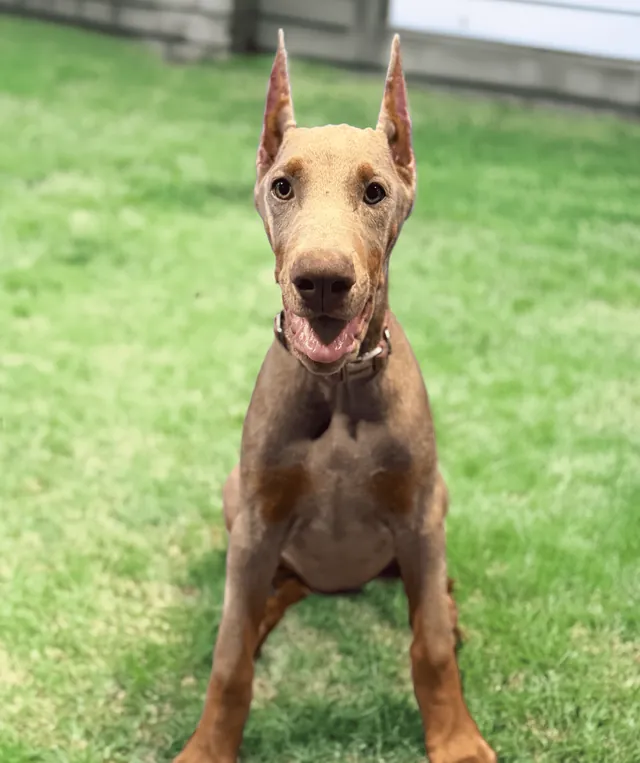
The Merck Veterinary Manual says color dilution alopecia is most widely recognized in Doberman Pinschers. It's linked to the gene variant that turns black coats blue and red coats fawn, and causes thinning hair and flaky skin, usually on the back. It isn't curable, but many dogs keep comfortable, good-looking coats with gentle care:
- Bathe with a mild or medicated shampoo your vet recommends; avoid harsh products.
- Ask about omega-3 fatty acids for skin support.
- Protect thin areas from sun and cold with a lightweight shirt or coat.
- Treat any skin infections promptly.
What Owego does: we breed blue and fawn Dobermans. All our dogs eat a salmon-and-potato all-life-stages food with an omega fish oil, and for our dilute dogs we use a medicated mousse and shampoo to manage occasional flare-ups. Ask your vet what suits your dog.
For more on dilute colors, see Blue and fawn Dobermans on our buyer's guide, or grooming a Doberman puppy on our puppy guide.
Frequently asked questions
How often should I bathe an adult Doberman?
Only when needed. The short coat stays clean with weekly brushing, and over-bathing can dry the skin, especially in blue and fawn Dobermans.
Why is my blue Doberman losing hair?
It may be color dilution alopecia, which Merck notes is most widely recognized in Dobermans. Have your vet rule out other causes like hypothyroidism, allergies or infection.
Do Dobermans shed?
Yes, moderately and year-round. Weekly brushing with a rubber curry keeps it under control.